
Descending the discreet staircase into Ginza Shinohara felt rather like discovering a hidden chamber beneath Tokyo’s glittering urban maze. This was my first visit, and immediately, a delicate hush enveloped the senses, inviting diners into a theatre of subtlety and meticulous refinement. Chef Takemasa Shinohara (篠原 武将), whose pedigree was sharpened under Kyoto’s renowned Kikunoi (菊乃井), clearly knows the nuances of a performance—not just culinary, but atmospheric.
The ambiance was notably restrained, tastefully minimalist with just enough Baccarat crystal to remind you gently that austerity here was intentional, not budgetary. Softly illuminated interiors framed by warm, lacquered woods and punctuated by carefully positioned art hinted at old-world charm without descending into stuffiness. It felt intimately sophisticated—almost as if one was privy to a discreetly whispered secret.

Shinohara-san has a clear respect for the Japanese calendar, evidenced particularly by the springtime sakizuke—a chilled Uni tofu (雲丹豆腐) presented elegantly in antique crystal. Its flavour, subtly marine yet luxuriously textured, hinted at deeper indulgences to come. Such gentle yet articulate openers often speak louder than brash fanfares.
Then came a dish that typified the chef’s meticulousness: an ethereal owan (お椀), a crystal-clear dashi holding an exquisite hotate no shinjo (帆立の真薯)—a subtly sweet scallop fishball crowned by the coveted kuchiko (くちこ), the rare dried sea cucumber ovary lending a salty, oceanic punch. An exquisite embodiment of ‘less is more’, as if Shinohara-san was gently reminding diners that restraint can be the most impactful seasoning.

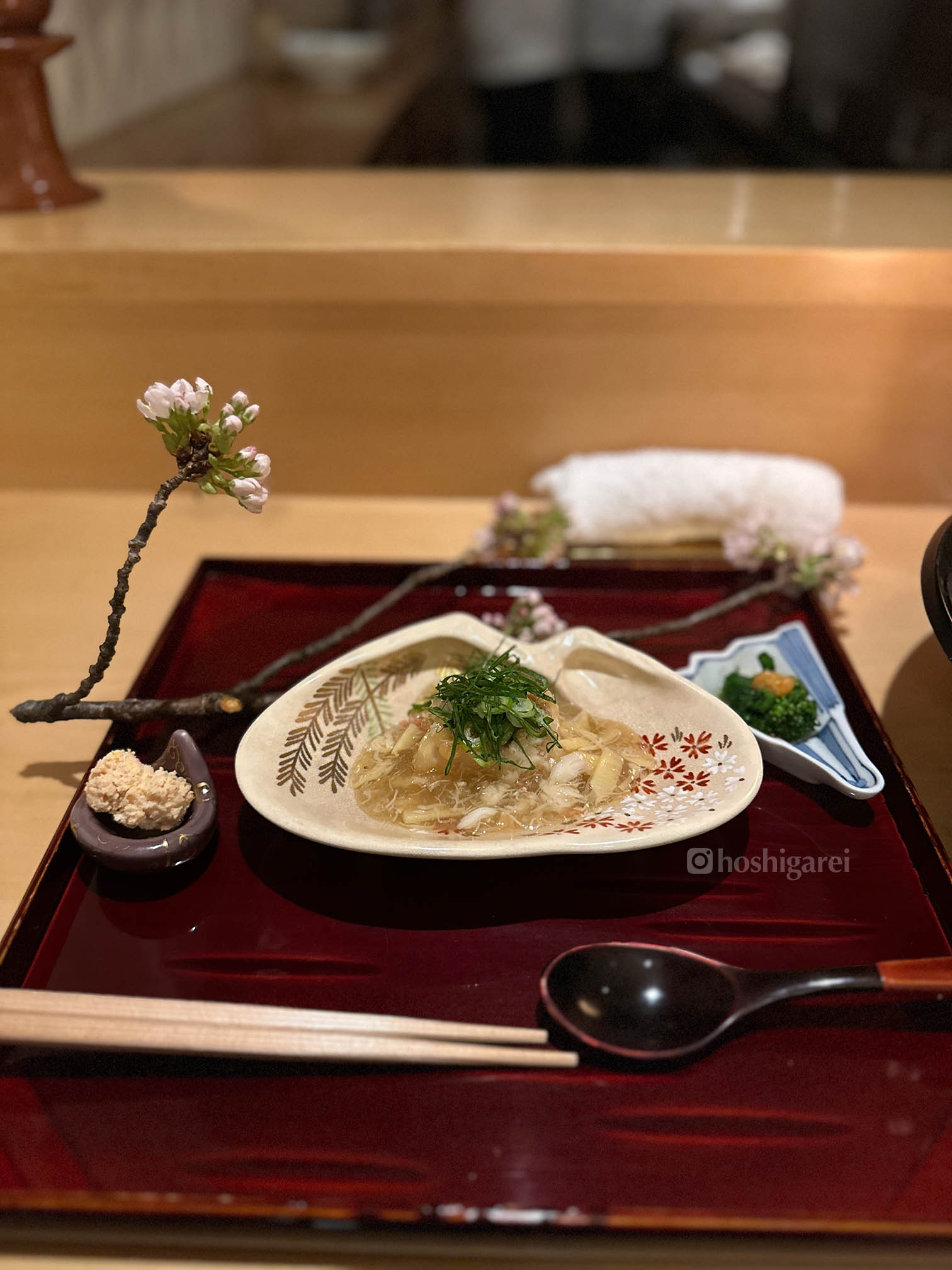
Indeed, what followed was a dazzling showcase of Shinohara-san’s prowess—the hassun (八寸), presented theatrically as lights dimmed, highlighting a delicate daikon lantern illuminating sakura branches, offered a clever nod to the Hanamatsuri (花祭り). Hidden within, a whimsically presented octopus tucked inside a painted hamaguri clam shell (蛤), its delicate vinegared sweetness counterbalanced masterfully by the gentle bitterness of perfectly blanched nanohana (菜の花). It was a composition as poetic as it was gastronomically pleasing—every bite unfolding like measured verses.

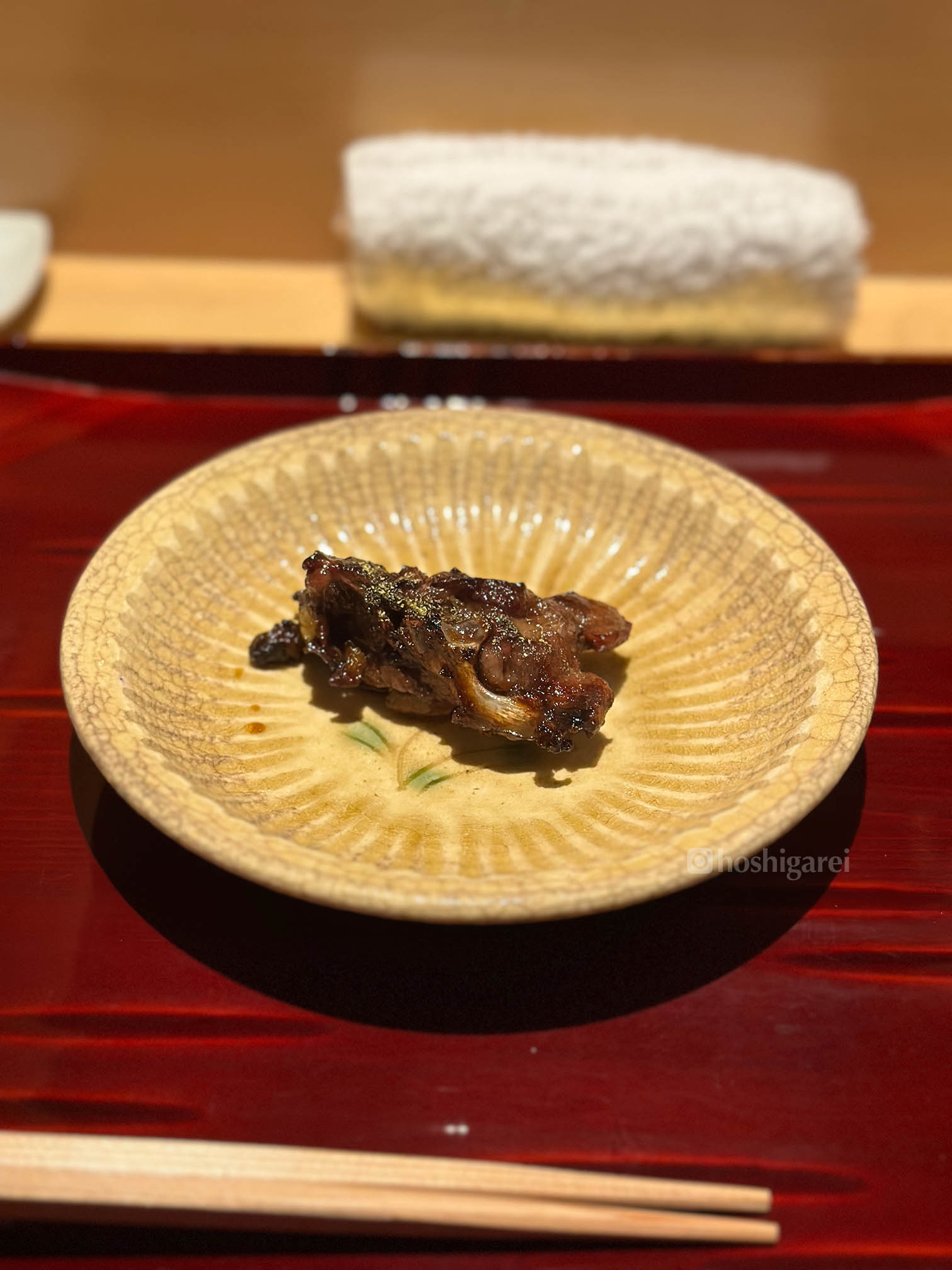
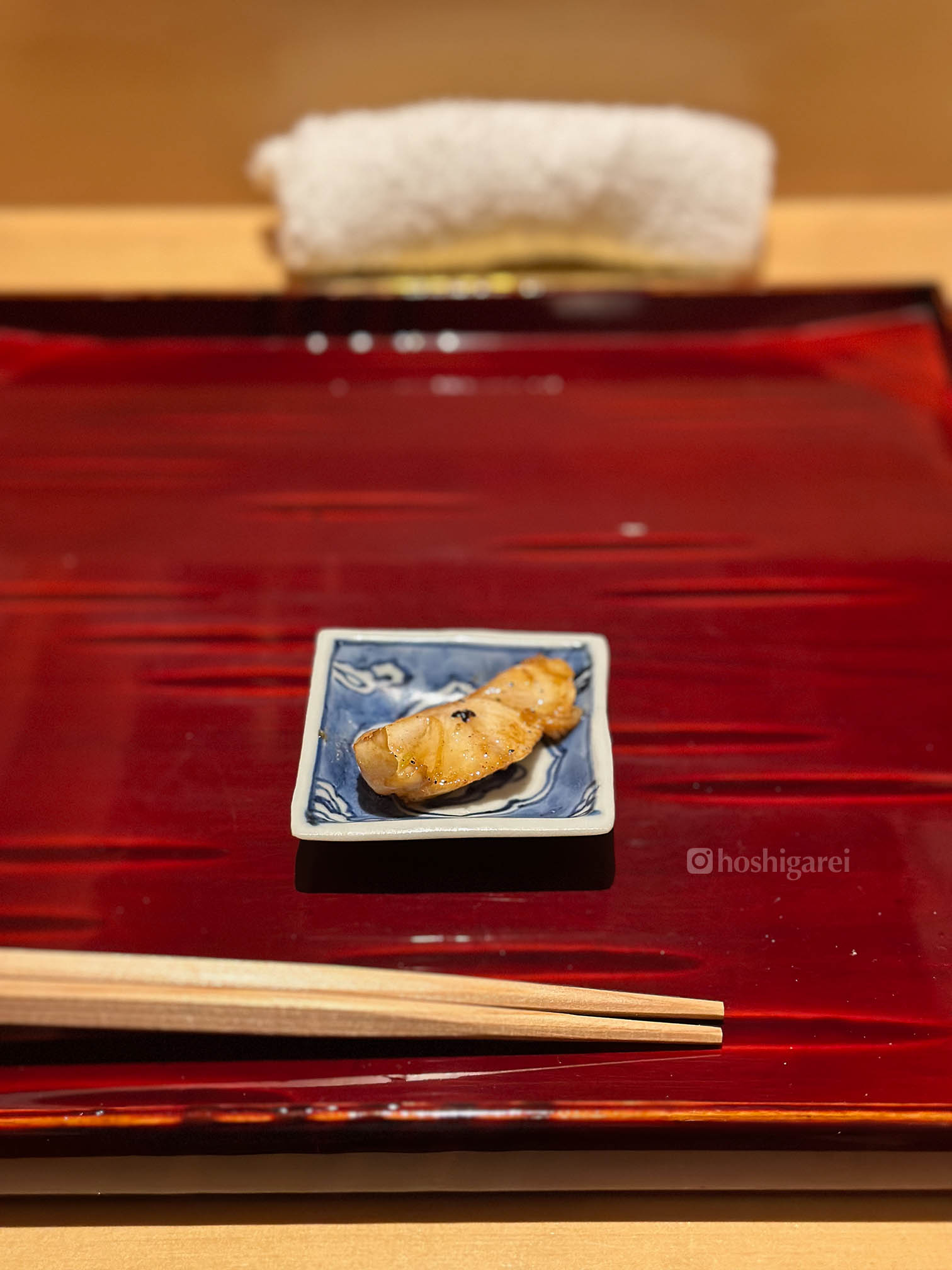
But Shinohara-san is also a chef unafraid of dramatic flair. His thick-cut bonito (鰹) sashimi, seared theatrically over flaming straw, showcased smoky subtleties that underscored the pristine fish without overwhelming it. Equally compelling was a grilled suppon (すっぽん)—soft-shelled turtle marinated deeply, glazed richly in tare, and garnished thoughtfully with sansho (山椒). The gelatinous, concentrated umami was masterful, a texture simultaneously unsettling yet captivating—exactly as intriguing as it sounds.
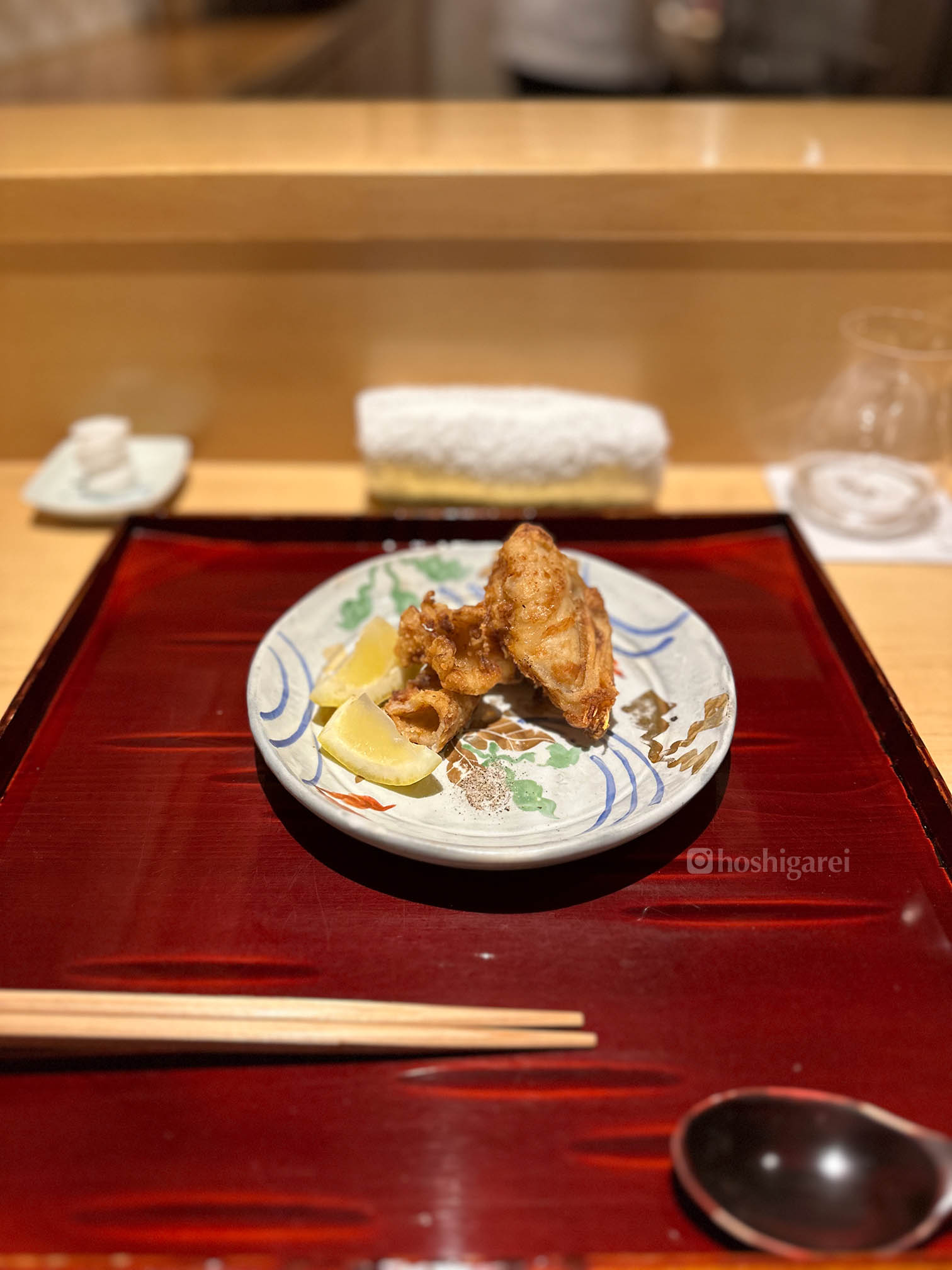
For contrast, and no doubt playful provocation, the karaage-style fried fugu (河豚の唐揚げ) offered crisp relief from the intensity of previous courses. Expertly battered and fried, each piece was juicy, tender, and lightly kissed with citrus—an elegantly humble yet indulgent interlude that was oddly comforting amid culinary theatre.
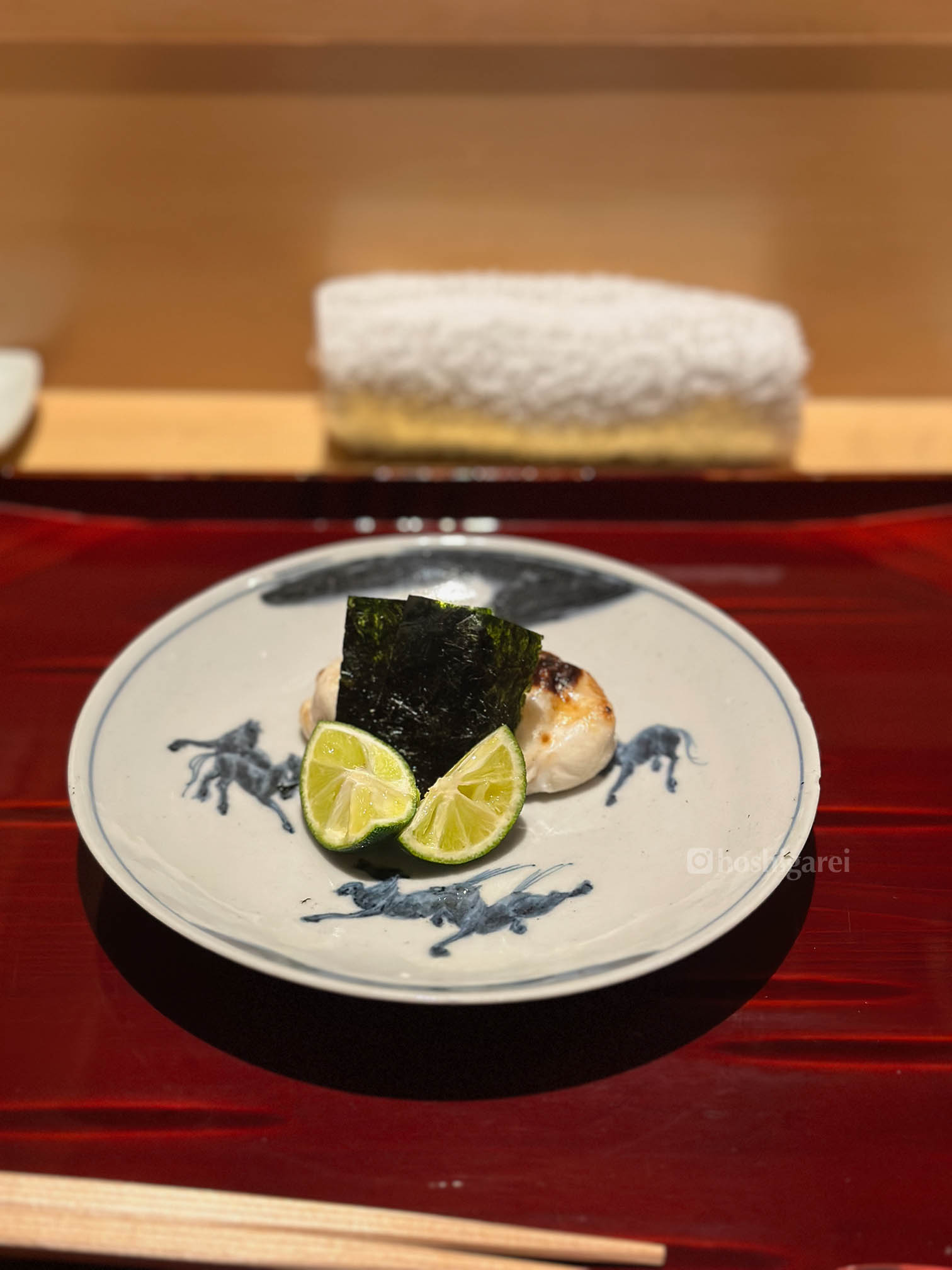
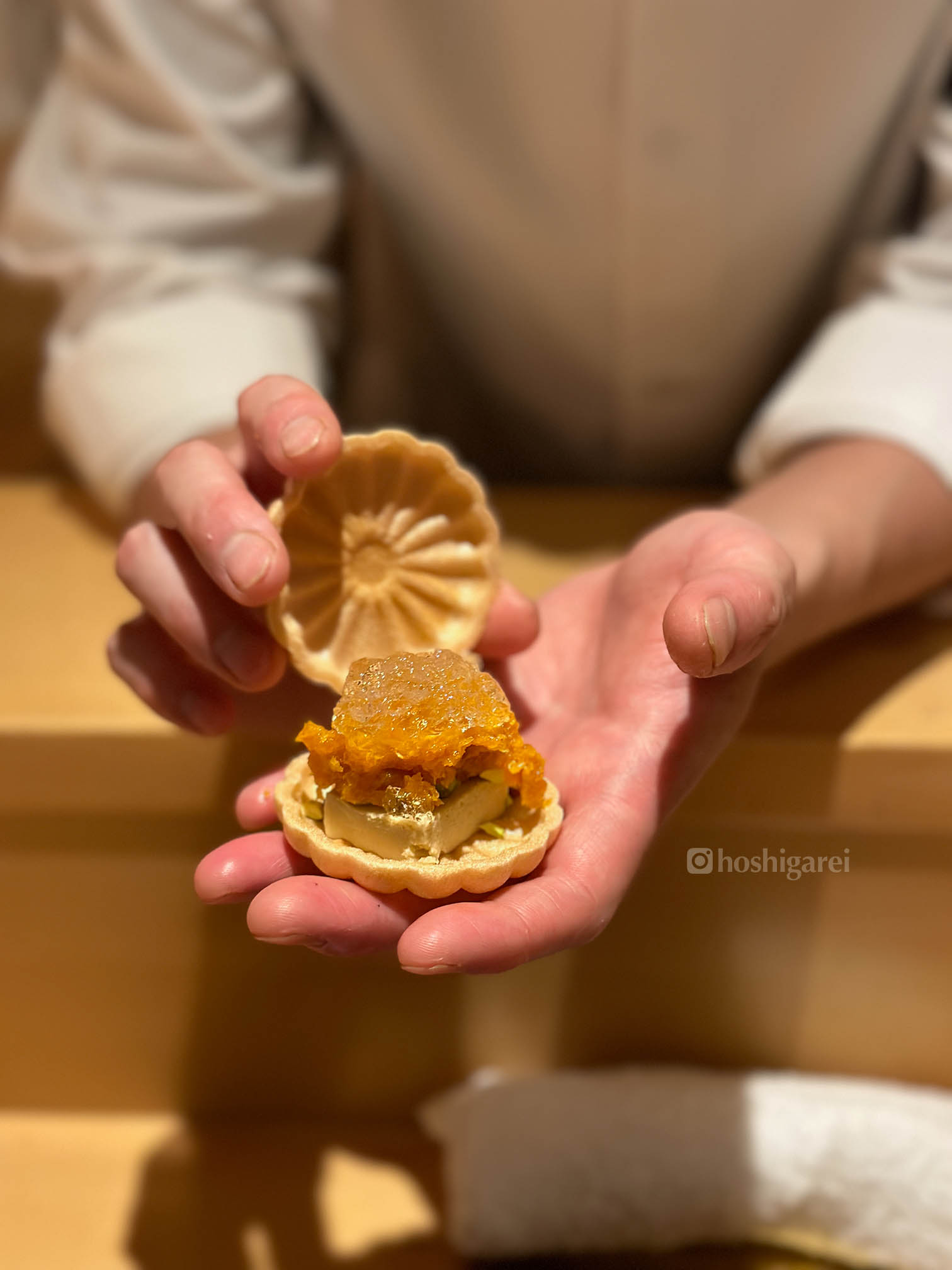
The menu continued seamlessly towards a crescendo—grilled shirako (白子) enhanced by crisp nori and vibrant sudachi, followed by a decidedly indulgent foie gras and dried persimmon monaka (最中), whimsically topped with whisky gelée. Each bite oscillated between sweet and savoury with measured precision, a mischievous nod perhaps to diners teetering between delight and decadence.

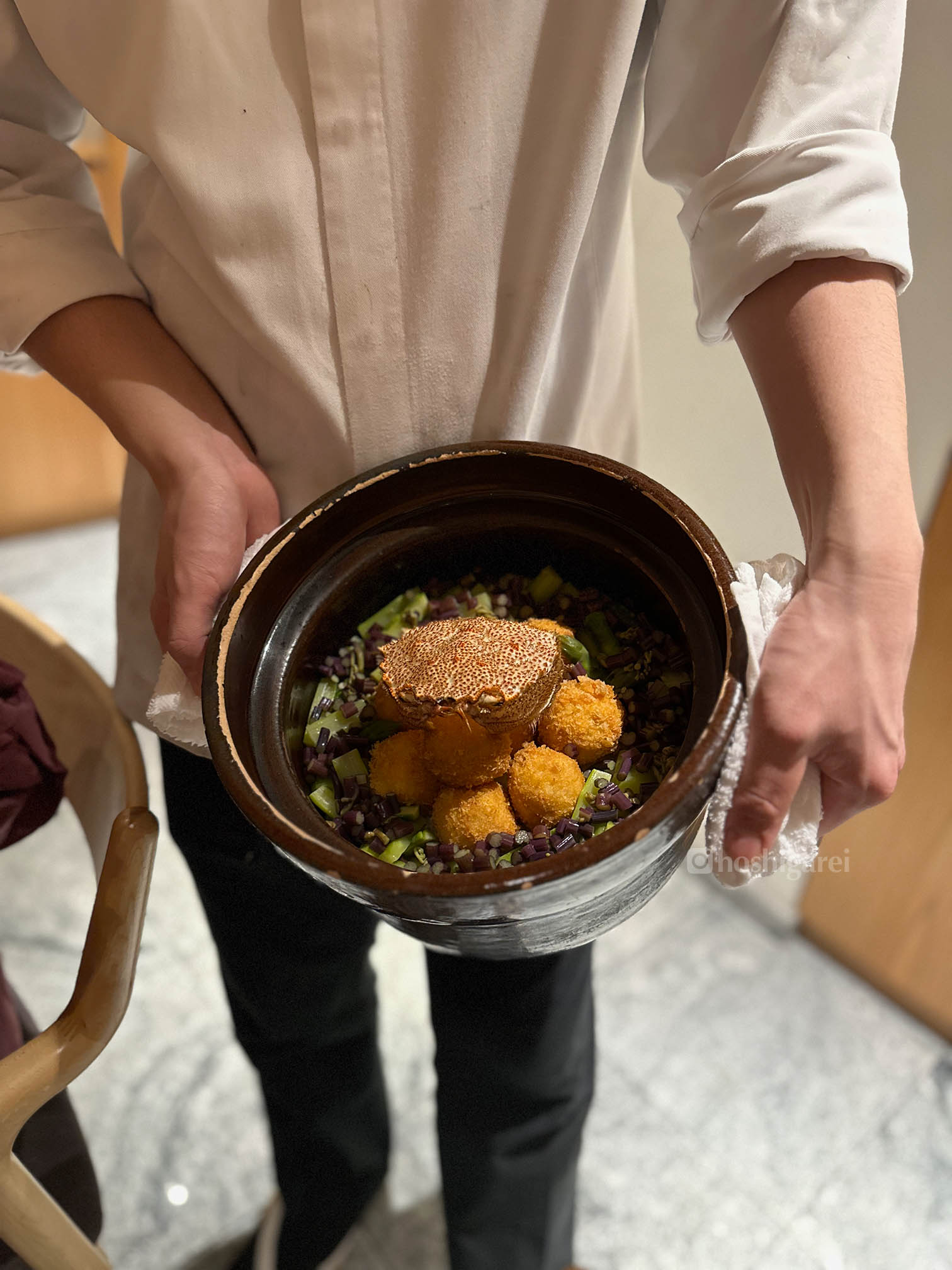
Yet it was perhaps the finale that best embodied the evening—a spectacular Kegani (毛蟹) takikomi gohan, crowned unapologetically with delicate crab croquettes. A dish so generously portioned and lavishly flavoured, it seemed determined to defeat already sated appetites. Resistance, naturally, proved futile.
Ginza Shinohara achieves a deft balance: traditional kaiseki sensibilities interwoven seamlessly with contemporary inventiveness. Shinohara-san’s cuisine neither shouts nor whispers—it speaks clearly and confidently, each dish composed with careful consideration yet presented with refreshing informality.
Leaving Shinohara felt akin to emerging from a dream, a deliciously detailed, impeccably orchestrated performance. Not bad, one might remark drily, for a quiet afternoon in Ginza. (Lunch April 2023)




 Hoshigarei
Leave a comment